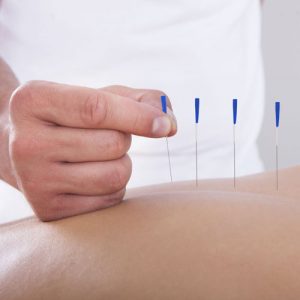
 Acupuncture is one of the principal therapeutic methods within Traditional Chinese Medicine (TCM). It involves the stimulation of specific points on the body, traditionally called acupoints, using needles and, in related practice, other forms of stimulation such as electrical stimulation or heat from moxibustion.
Acupuncture should not be understood simply as inserting needles into painful areas. It is a systematic therapeutic approach in which diagnosis, identification of the relevant meridians and acupoints, selection of treatment principles, and appropriate needling techniques are integrated.
Origin of Acupuncture
The Ancient Foundations (approx. 100 BCE and Earlier)
The earliest origins of acupuncture predate written history. Archaeological evidence suggests that the precursors to acupuncture needles were Bian stones (sharpened stones) or bone fragments used to lance boils, drain abscesses, or stimulate specific areas of the skin to relieve pain.
• The Textual Foundation: The definitive foundation of acupuncture was laid with the compilation of the Huangdi Neijing (The Yellow Emperor’s Classic of Internal Medicine), roughly dated between the 2nd century BCE and the 1st century BCE.
• The Concepts: Written as a dialogue between the mythical Yellow Emperor and his ministers, this text codified the core principles of Traditional Chinese Medicine (TCM). It shifted medicine away from shamanic interpretations of disease (such as demonic possession) and toward a system based on natural laws, observation, and the balance of opposing forces (Yin and Yang).
• Early Technology: The Neijing described the “Nine Needles,” shifting away from stone toward bronze, gold, iron, or silver wires, allowing for fine, precise insertion without lacerating the tissue.
Systematization and Golden Ages (1st Century – 19th Century)
Over the next several centuries, scholars and physicians systematically mapped out the point systems and medical theories used today.
• Mapping the Points: Around 256 CE, the physician Huangfu Mi compiled the Zhenjiu Jiayijing (The Systematic Classic of Acupuncture and Moxibustion). This text explicitly mapped out 349 specific acupuncture points and detailed their precise anatomical locations and indications.
• The Bronze Statues: In 1026 CE, during the Song Dynasty, Dr. Wang Weiyi designed two life-sized bronze acupuncture statues. These statues were hollow, drilled with holes at exact acupoint locations, and coated in wax. For imperial medical examinations, the statues were filled with water. If a student pierced the exact point correctly, water would bead out, standardizing testing and point location for the empire.
• Peak Synthesis: During the Ming Dynasty (1368–1644 CE), the Zhenjiu Dacheng (Compendium of Acupuncture and Moxibustion) was published. This monumental work synthesized centuries of clinical experience, forming the bedrock of modern classical acupuncture curriculum.
Decline and Suppression (19th – Early 20th Century)
As Western medicine and scientific methodologies began to enter Asia in the 19th century, traditional practices faced severe political and cultural backlashes.
• Imperial Rejection: In 1822, the Qing Dynasty imperial government issued a decree banning acupuncture and moxibustion from the Imperial Medical Academy, declaring it unfit for the imperial court in favor of Western medical science.
• The Nationalist Era: In 1929, the Chinese Nationalist Government went as far as proposing a total ban on traditional medicine to modernize the country. While public outcry prevented the ban, acupuncture was relegated to a marginalized, unregulated underground practice for decades.
The Resurgence and Globalization (Mid-20th Century – Present)
Acupuncture’s modern survival and global expansion are largely tied to political shifts in mid-century China and a chance meeting with an American journalist.
The “Barefoot Doctors” and Modern TCM Synthesis
Following the establishment of the People’s Republic of China in 1949, Chairman Mao Zedong faced a massive rural healthcare crisis with an acute shortage of Western-trained doctors.
Mao championed a synthesis of traditional and Western medicine. He institutionalized acupuncture, establishing universities of Traditional Chinese Medicine to standardize the curriculum. Rural healthcare workers, known as “barefoot doctors,” were trained in basic acupuncture and sanitation, bringing the practice to hundreds of millions of people.
The “Reston Effect” and Western Integration
Acupuncture burst into Western public consciousness in July 1971. New York Times journalist James Reston accompanied National Security Advisor Henry Kissinger to China to prepare for President Richard Nixon’s historic visit.
While there, Reston required an emergency appendectomy at the Anti-Imperialist Hospital in Beijing. Doctors utilized standard chemical anesthesia for the surgery, but used acupuncture needles post-operatively to manage his severe muscle cramping and pain. Reston detailed his highly effective experience in a front-page article titled, “Now, About My Appendicitis in Peking…” This single article ignited immense public and medical curiosity in the United States and Europe.
Modern Scientific Validation
Following the 1971 boom, global medical institutions began evaluating the ancient practice using modern clinical standards:
• 1996: The U.S. Food and Drug Administration (FDA) reclassified acupuncture needles from “experimental” medical devices to safe and effective regulated medical instruments.
• 1997: The National Institutes of Health (NIH) issued a landmark consensus statement recognizing acupuncture’s clear efficacy for post-operative and chemotherapy-induced nausea, as well as its benefits for managing structural pain.
• Today: Acupuncture is no longer viewed simply as an “ancient folk remedy.” It is integrated into top-tier academic medical centers, military hospitals (including the U.S. Department of Veterans Affairs), and oncology centers worldwide, evaluated by its ability to stimulate the nervous system and regulate pain.